
Facts About India

General Information about India
The official name is Republic of India and India for short. The official Sanskrit name for India is Bharat. New Delhi is the capital of India and Mumbai is considered to be the financial Capital of India. The population is over a billion and area is 3.3 million square kilometers. The coast line is 7600km.
India has two National languages (Central administrative). English enjoys associate status but is the most important language for national, political, and commercial communication; Hindi is the national language and primary tongue of 30% of the people; there are 14 other official languages: Bengali, Telugu, Marathi, Tamil, Urdu, Gujarati, Malayalam, Kannada, Oriya, Punjabi, Assamese, Kashmiri, Sindhi, and Sanskrit; Hindustani is a popular variant of Hindi/Urdu spoken widely throughout northern India but is not an official language.
The literacy is 65.38%.The National Anthem of India is Jan gana mana written by Rabindranath Tagore and the National Song is Vande Mataram, composed in Sanskrit by Bankimchandra Chatterji. The National animal is Tiger, National Bird is Peacock, National emblem is the Ashoka Chakra, National Tree is Banyan, National flower is Lotus, National fruit Mango and National sport is Hockey.
India's diverse economy encompasses traditional village farming, modern agriculture, handicrafts, a wide range of modern industries, and a multitude of services. Services are the major source of economic growth, accounting for more than half of India's output with less than one third of its labor force. About three-fifths of the work force is in agriculture, leading the UPA government to articulate an economic reform program that includes developing basic infrastructure to improve the lives of the rural poor and boost economic performance. The government has reduced controls on foreign trade and investment. Tariffs averaged 12.5% on non-agricultural items in 2006. Higher limits on foreign direct investment were permitted in a few key sectors, such as telecommunications. However, tariff spikes in sensitive categories, including agriculture, and incremental progress on economic reforms still hinder foreign access to India's vast and growing market. Privatization of government-owned industries remained stalled in 2006, and continues to generate political debate; populist pressure from within the UPA government and from its Left Front allies continues to restrain needed initiatives. The economy has posted an average growth rate of more than 7% in the decade since 1996, reducing poverty by about 10 percentage points. India achieved 8.5% GDP growth in 2006, significantly expanding manufacturing. India is capitalizing on its large numbers of well-educated people skilled in the English language to become a major exporter of software services and software workers. Economic expansion has helped New Delhi continue to make progress in reducing its federal fiscal deficit. However, strong growth - more than 8 percent growth in each of the last three years - combined with easy consumer credit and a real estate boom is fueling inflation concerns. The huge and growing population is the fundamental social, economic, and environmental problem.
Our Vision
The number system was invented by India. Aryabhatta was the scientist who invented the digit zero.
The' place value system' and the 'decimal system' were developed in 100 BC in India. Ayurveda is the earliest school of medicine known to mankind. The father of medicine, Charaka, consolidated Ayurveda 2500 years ago.
Usage of anesthesia was well known in ancient India medicine. Detailed knowledge of anatomy, embryology, digestion, metabolism, physiology, etiology, genetics and immunity is also found in many ancient Indian texts.
The art of Navigation & Navigating was born in the river Sindh 6000 over years ago. The very word 'Navigation' is derived from the Sanskrit word NAVGATIH. The word navy is also derived from the Sanskrit word 'Nou'. India is the largest democracy in the world
-
Our Vision
To inspire breakthroughs in the way the world treats children, and to achieve immediate, and lasting change in their lives
-
Our Mission
Build a world in which every child has the right to survival, protection, development, and participation
Call us any time:
+91 982 920 0912



Let’s Start Something For Them
Giving Has Never Caused Anyone
To Become
Poor.
Our Volunteer
Meet The Constructive Volunteer
M
e
e
t
T
h
e
C
o
n
s
t
r
u
c
t
i
v
e
V
o
l
u
n
t
e
e
r




Your Trust, Their Future
We Turn Your Kindness Into
Real Change
We’re more than just a charity — we’re a movement of hope. Every donation, every gift, every hour volunteered goes directly to changing a child’s world. Here’s why thousands trust us to deliver smiles and second chances


“Stay informed about our upcoming events and campaigns. Whether it's a fundraising gala, a charity run, or a community outreach program, there are plenty of ways to get involved and support our cause. Check our event calendar for details. We prioritize your security. Our donation process uses the latest encryption technology to protect your personal and financial information. Donate with confidence knowing”

Daniel Thomas
CEO, Founder
“Stay informed about our upcoming events and campaigns. Whether it's a fundraising gala, a charity run, or a community outreach program, there are plenty of ways to get involved and support our cause. Check our event calendar for details. We prioritize your security. Our donation process uses the latest encryption technology to protect your personal and financial information. Donate with confidence knowing”
Daniel Thomas
CEO, Founder

Frequently Asked Questions
There's Donation Center
Can Do
Question.
What kind of volunteer work is available?
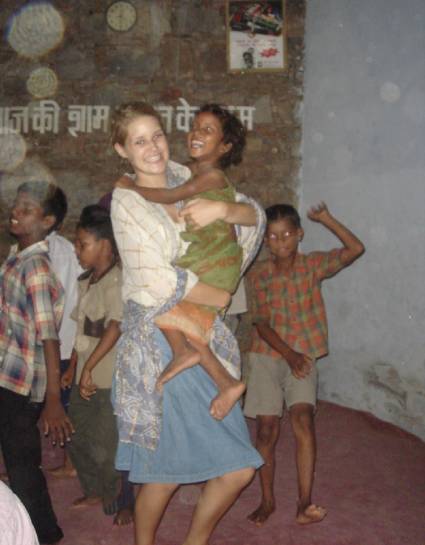
Broadly speaking, we offer volunteer work opportunities in child care, teaching English, caring for orphans, environment awareness, first Aid and health care, community development, women empowerment and street children education program. Each of these offers specific job roles, though a few requirements are common. It is important for you to appreciate that besides doing the job allotted, we also aim at evolving and initiating new activities in the interest of the local population.
What is the duration of the volunteer program?
The volunteer work has to be done for a minimum of 2 weeks to as many weeks/months desirable to the volunteer as per his/her convenience. Each volunteer is expected to join the course either on 1st or 15th of the respective month. In case someone is unable to do so, he/she can join the course as per their convenience subject to confirmation.
What do I do in free time?
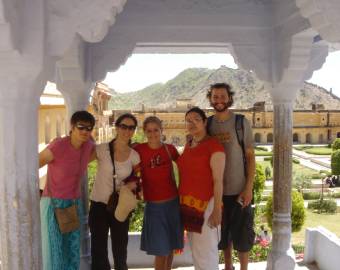
India has a lot to offer. Depending upon your taste and preferences, you may choose sight-seeing or you can also interact with the local people and observe their culture, traditions, and lifestyles more closely.