
Etiquette & Customs in India
Simple cultural guidelines to help you show respect and feel comfortable while living and volunteering in Rajasthan.
Simple cultural guidelines to help you show respect and feel comfortable while living and volunteering in Rajasthan.
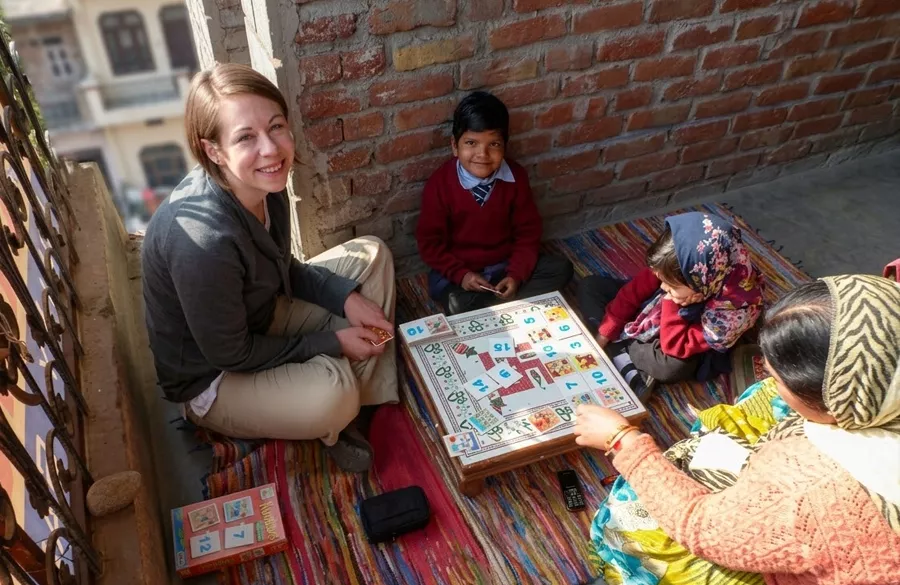
India is very welcoming to guests, and people are usually happy to help you. At the same time, some customs are different from Western countries, especially in villages.
Following a few basic guidelines will help you avoid misunderstandings, show respect to local people and feel more at home during your stay.
The most common and respectful greeting is “Namaste”. You gently press your palms together in front of your chest, slightly bow your head and say “Namaste”.
This greeting is always safe to use with men and women, in villages and cities, and works well in homes, schools and religious places.
In India the right hand is considered clean and respectful for giving and receiving things. Use your right hand when you offer money, food, gifts or documents.
The left hand is often linked to unclean tasks, so try not to use it for eating, passing food or touching shared items.
People in villages may ask you personal questions such as your age, job, income or if you are married. This is usually a sign of curiosity, not rudeness.
You can answer simply, skip any question you do not want to discuss, and keep a friendly tone. A smile goes a long way in building trust.
As a foreign volunteer, you may notice people looking at you more than you are used to. In many parts of India, staring at something new or different is common and not meant to be offensive.
Try not to feel uncomfortable; a brief smile or “Namaste” usually turns the situation into a positive interaction.
When you are not sure about the correct behaviour in a situation, simply observe what local people are doing and follow their example.
You can always ask your coordinator or host family for advice. They are happy to explain local customs and help you avoid any cultural mistakes.
Your donation helps us educate children, support health camps and protect the environment in and around Jaipur.

Volunteering India is a non‑profit initiative based in Jaipur, Rajasthan, connecting international volunteers with grassroots projects in education, health, environment and community development.